Group Project @ Politecnico di Milano
📝 Project Background
During the Final Design Studio, the students were asked to design for an innovative solution solving pressing concerns that we are facing in this world. Starting with the general idea of Food, our team explore the benefits and potential ways of introducing future food into people's current diet.
💎 The Process
Throughout our project, we followed a comprehensive process covering background research, concept definition, concept development, prototyping, and rigorous testing. The concept development phase had a strong focus on the technological aspect, ensuring the project's practicality. This involved crafting product design specs, interaction flowcharts, Product and Interaction Network analysis, and risk plans. Our user-centric approach, supported by thorough research, enabled us to create a coherent and effective final product. We successfully integrated various elements by utilizing the Product and Interaction Network methodology. Overall, our project showcases technological expertise and meticulous planning for real-world implementation.

📚 Theoretical Background
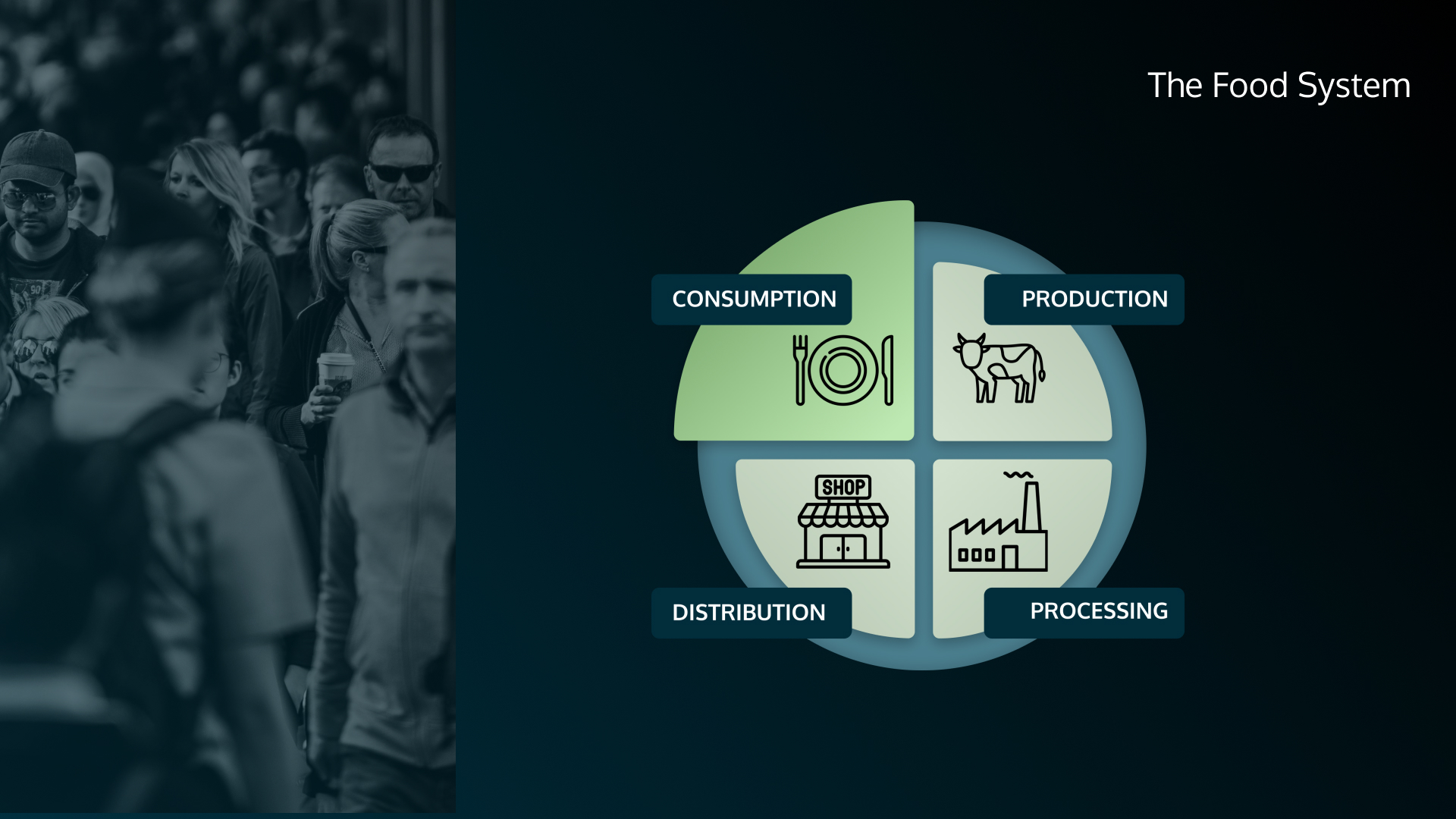
For this project, our focus was on the food industry, seeking to understand its future trajectory and the driving forces that will shape it. Our research extensively explored the significant challenges facing the food sector today, leading us to examine the intricacies of the supermarket environment and its micro-level dynamics. We realized that although we often take the availability of food in supermarkets for granted, the underlying food system is remarkably fragile. This system encompasses four distinct areas: production, processing, distribution, and consumption, each presenting its own set of issues.
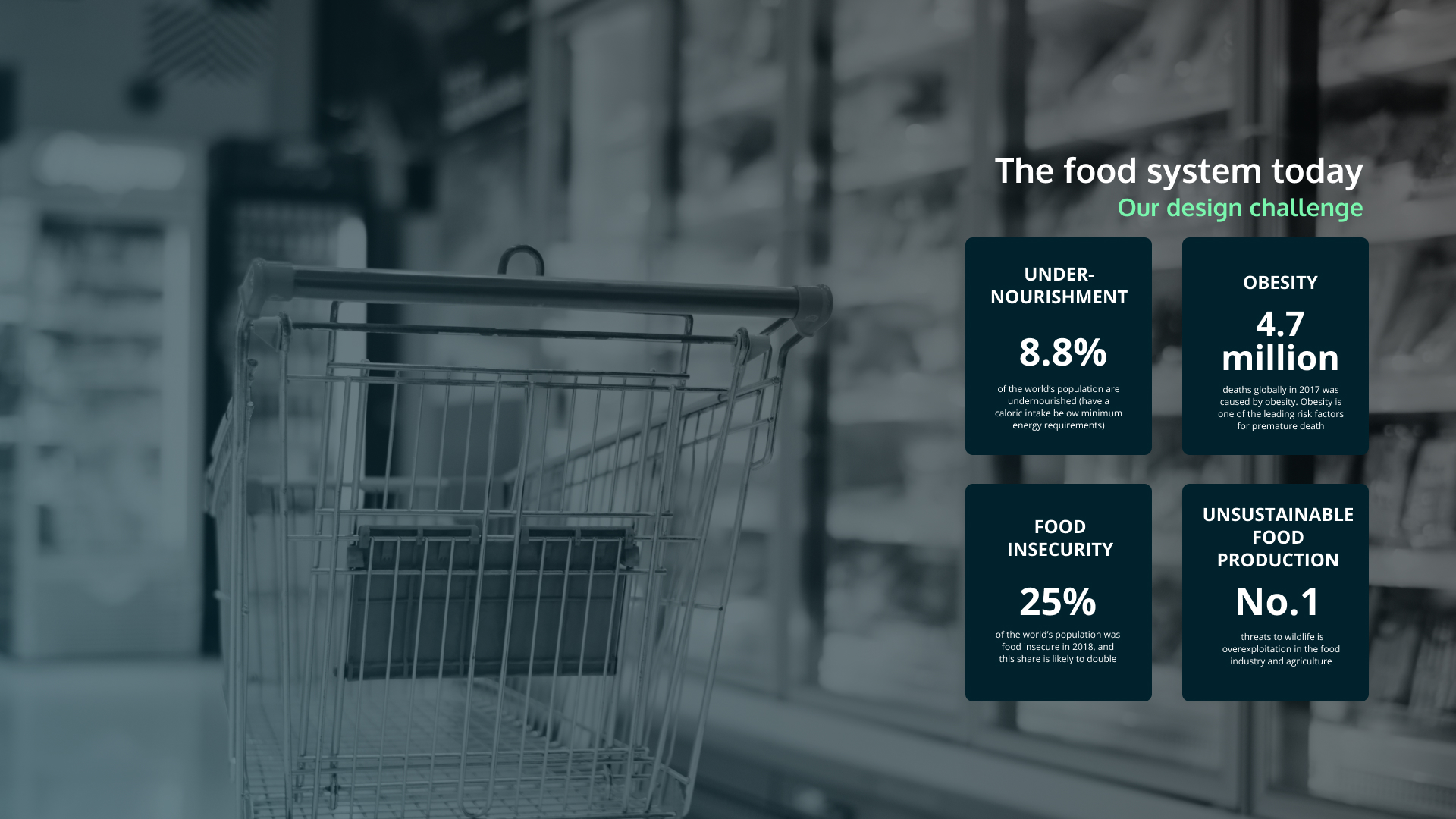
To address these challenges effectively, we deliberately chose to tackle the consumption aspect, recognizing its profound impact on all other areas. Consumption encompasses dietary patterns, behavioral habits, and overall lifestyles. We set out to understand how we could instigate positive changes in people's habits to promote a more sustainable and responsible food culture.
In our quest for solutions, we delved into the realm of persuasive technology, where we defined specific strategies and criteria to guide our approach throughout the project. Our goal is to devise innovative and effective methods to encourage behavioral shifts and create a more resilient food ecosystem.

🤔 Research Question
How Might We introduce future foods to people, in a way they would actually want to incorporate them in their diets?
How Might We use technology to enable this?
⚡️ Concept
“Introducing future foods for a better world”

FutureFoodHub consists of a network of touchpoints that introduce future food to people. The smart vending machines installed in urban cities provide effortless access to alternative sustainable food. The alternative food is those consumed as substitutes to meat and seafood as part of an individual's diet, such as plant-based meat substitutes, algae, and insects. The alternative food market has foreseeable growth in the future. They offer rich proteins and many necessary nutrients. More importantly, the foods anticipate a more sustainable way of producing and consuming food.
FutureFoodHub introduces these future foods by nudging people to try out sustainable future food of their preference based on their emotional response and connecting all the users for the collective efforts through the online community on the mobile app.
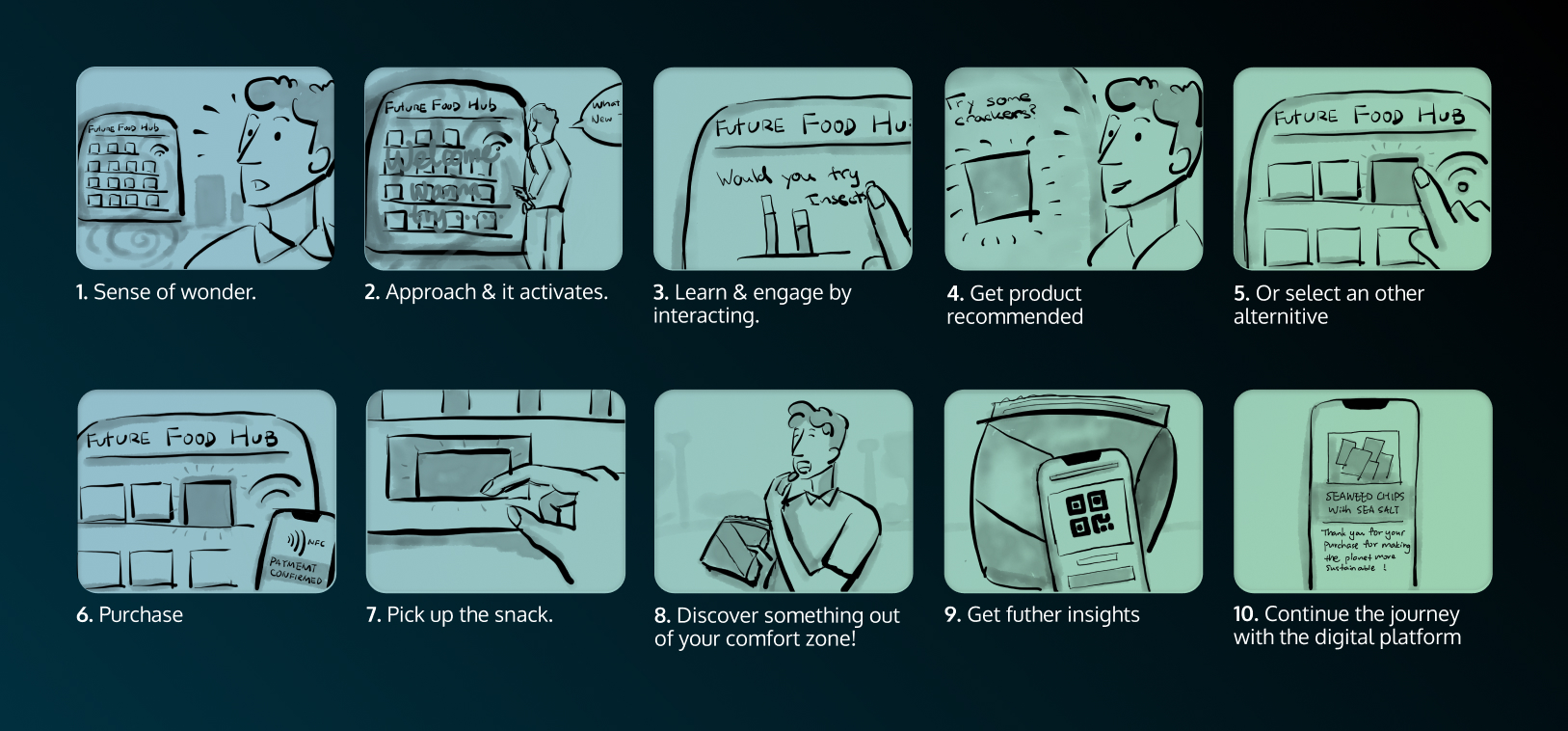
Our Innovative Technology: Emotion detection recommendation system
For first time users, we provide an introductory video of our vision for the food system and future foods. The machine responds according to their emotional response, recommending a future food snack more applicable to each person. At the moment, our concept contemplates three different responses according to their willingness, representing positive, neutral and negative responses.
📱 Prototype
In order to test the concept, a MVP was introduced, which is a version of a product with just enough features to be usable by early customers who can then provide feedback for future product development.


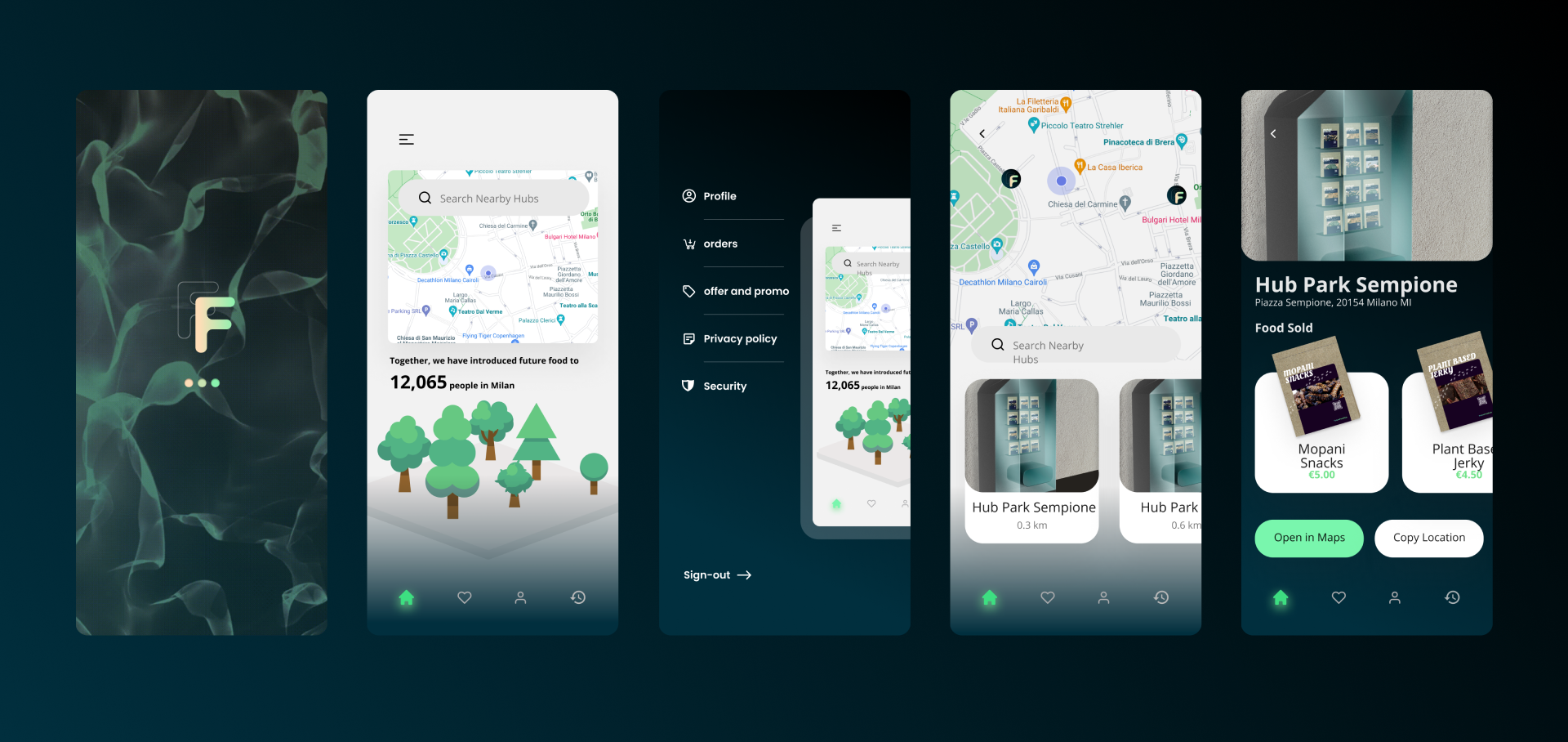
For mre details about the MVP and the prototype, please refer to the project website.
📋 Testing
Our prototype was tested by more than 20 users. With the physcial prototype, we were able to demostrate the envisioned experience. The prototype utilizes an iPad mini as the interactive screen and Unity runs on Windows as the computing system behind.


🔍 Insights
After the testing, we managed to gather mainly qualitative insights, but also some quantitative data related to emotional detection. In a general view, we encountered interesting reflections about our emotional detection mechanism and of course, elements that needed to work better. These results allowed us to iterate the project based on the following points.
