Civic DAO
My Master's thesis project exploring digital solutions supporting civic engagement in urban environments
Thesis @ Politecnico di Milano
Individual Thesis
Tutor: Davide Fassi
Co-tutors: Francesco Vergani, Jixiang Jiang
📝 Project Background
This is my thesis project for my Master of Science degree of Digital and Interaction. In the project, I explored the emerging Information and Communication Technologies (ICT) tools, such as social crowdfunding, and WEB 3.0 in supporting civic engagement in urban regeneration process.
💎 The Process
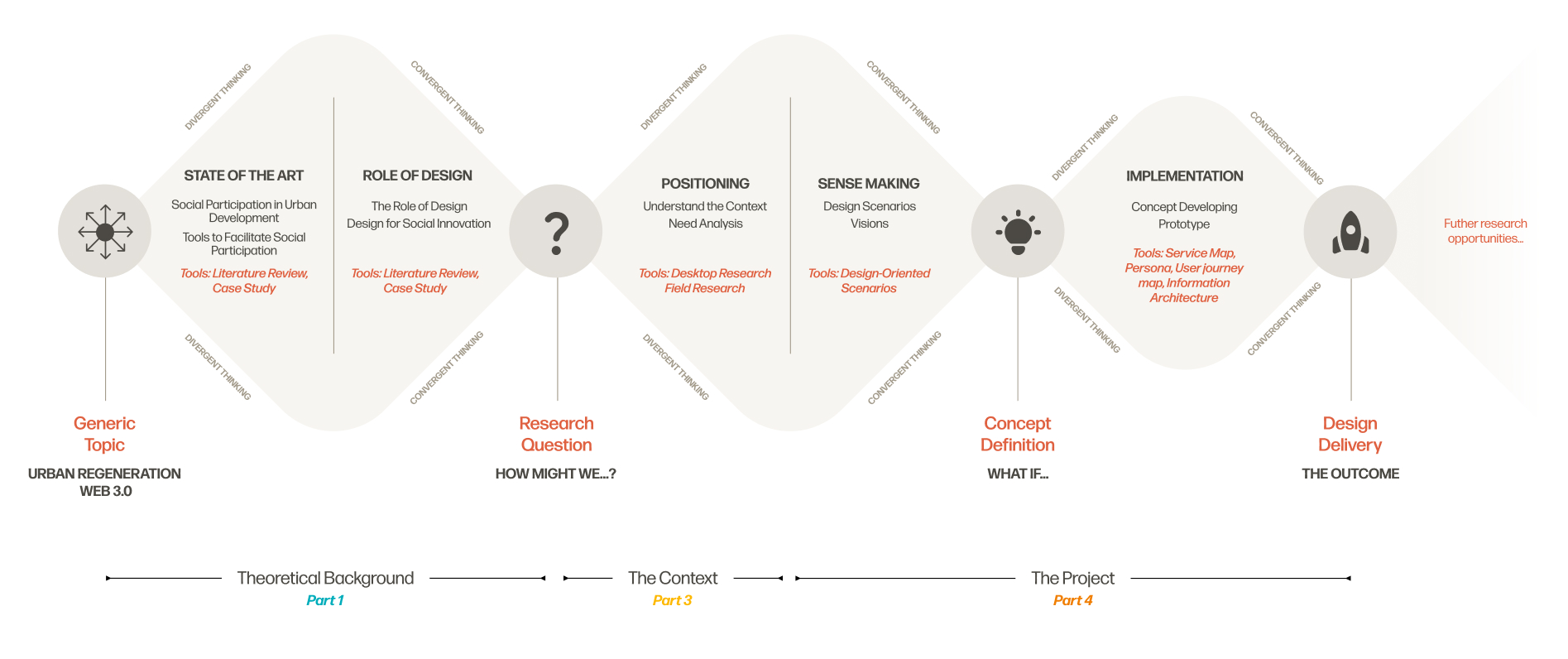
The overall process of the thesis follows the divergent and convergent thinking process adopted from the double diamond model. The main approaches are theoretical research through literature review and research through design, meaning to answer the research question through designing and implementing a proposed solution.
📚 Theoretical Background
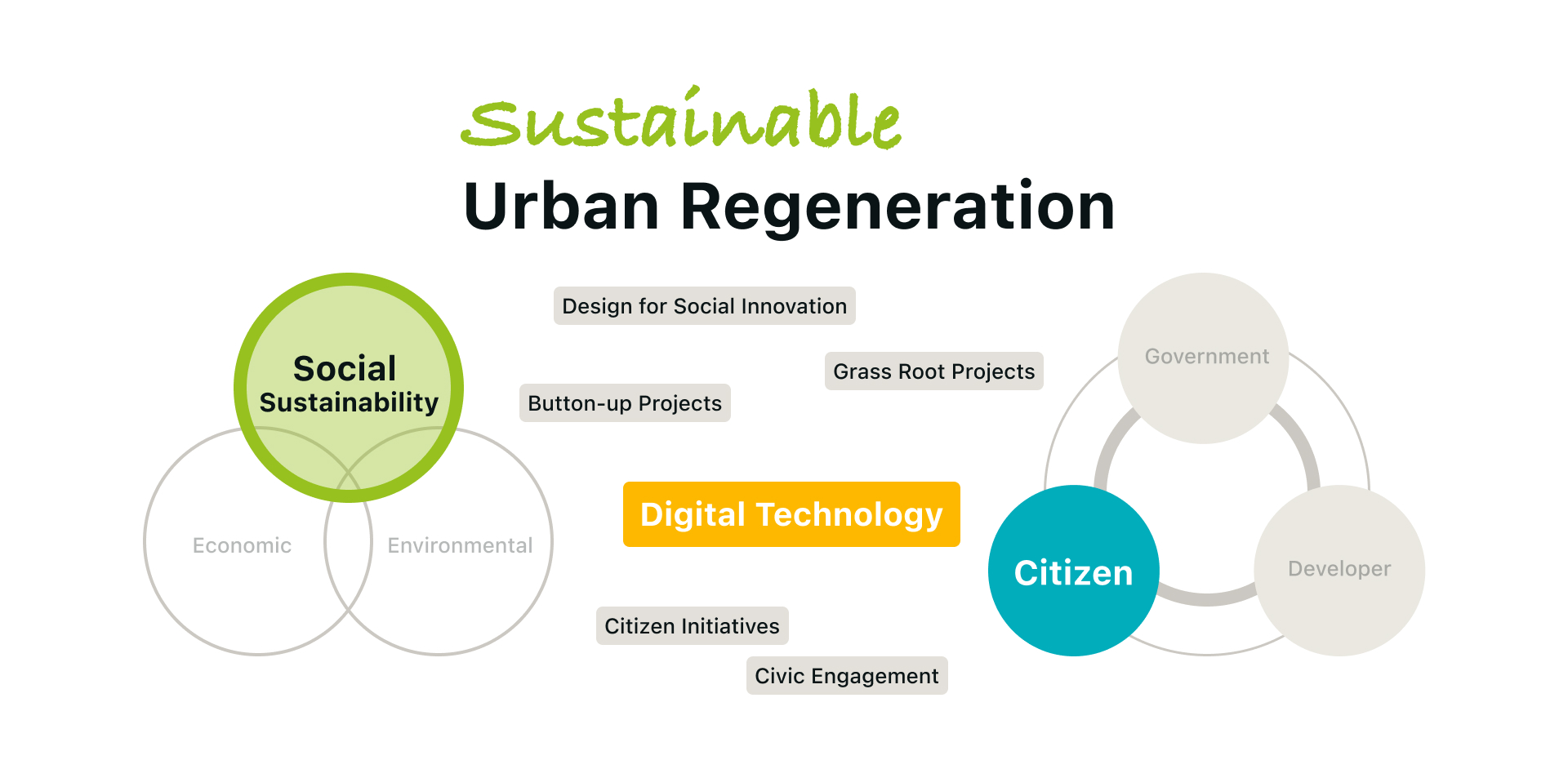
Sustainable development, supported by global initiatives like the UN's SDG goal 11 and the European Union's urban agenda, has gained significance. Citizens are now key participants, acting as users, organizers, and initiators of urban regeneration projects. This combination has led to emerging topics like design for social innovation, grassroots movements, and civic engagement. Further research and literature highlight the significance of digital technology in promoting civic engagement in urban development.
Before jump into the design question, I would also like to highlight this quote from Professor Ezio Manzini that has been one of the greatest inspiration and guideline for developing this thesis:
The designer must utilize their knowledge and experience to design technical and social infrastructure in order to create a more favorable socio-material environment (Manzini, 2022)
🤔 Research Question
How Might Weuse digital solutions to help the citizens to build the sense of belonging and promote civic engagement in the neighborhood?
This HMW question is an inquiry into exploring ways to leverage technology to foster a stronger sense of belonging within the neighborhood, where residents feel connected to each other and have a shared sense of ownership and pride. Additionally, the question emphasizes the promotion of civic engagement, encouraging citizens to actively participate in community affairs, decision-making processes, and local initiatives.
📑 Case Studies
🏘 Context
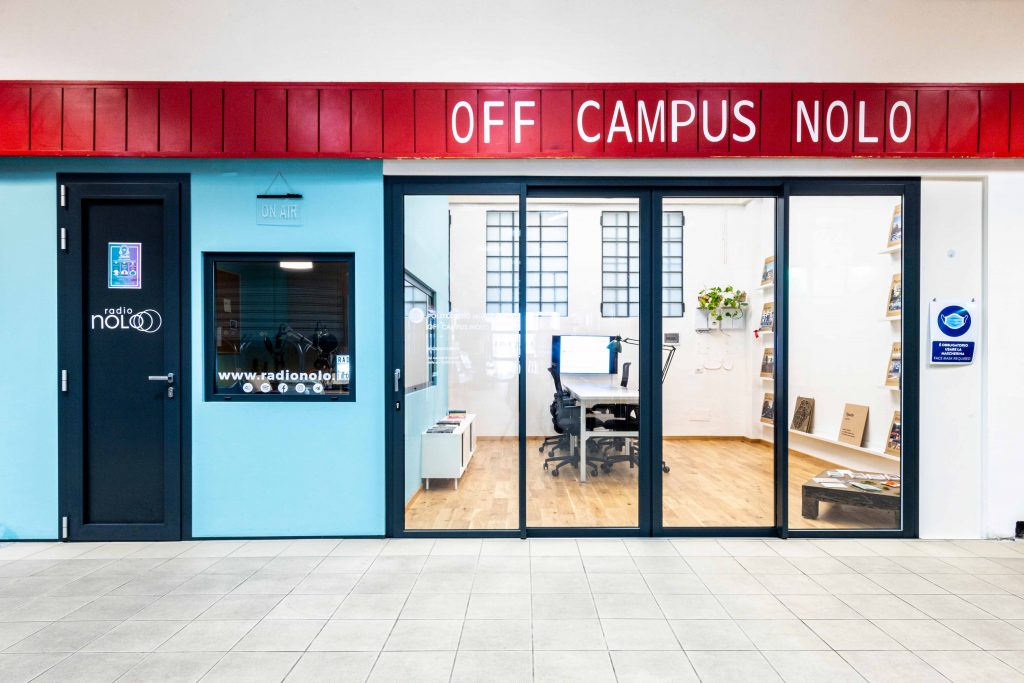
Off Campus NOLO
In order to futher elaborate the HMW question and develop the design solutions. I had the pleasure to reached out to Off Campus Nolo, which is an initiative promoted by Polisocial with the aim of strengthening the presence of Politecnico in the city of Milan. The polimi DESIS lab has carried out a lot of research activities and projects in the specific neighborhood of Nolo.
NOLO - Nord di Loreto
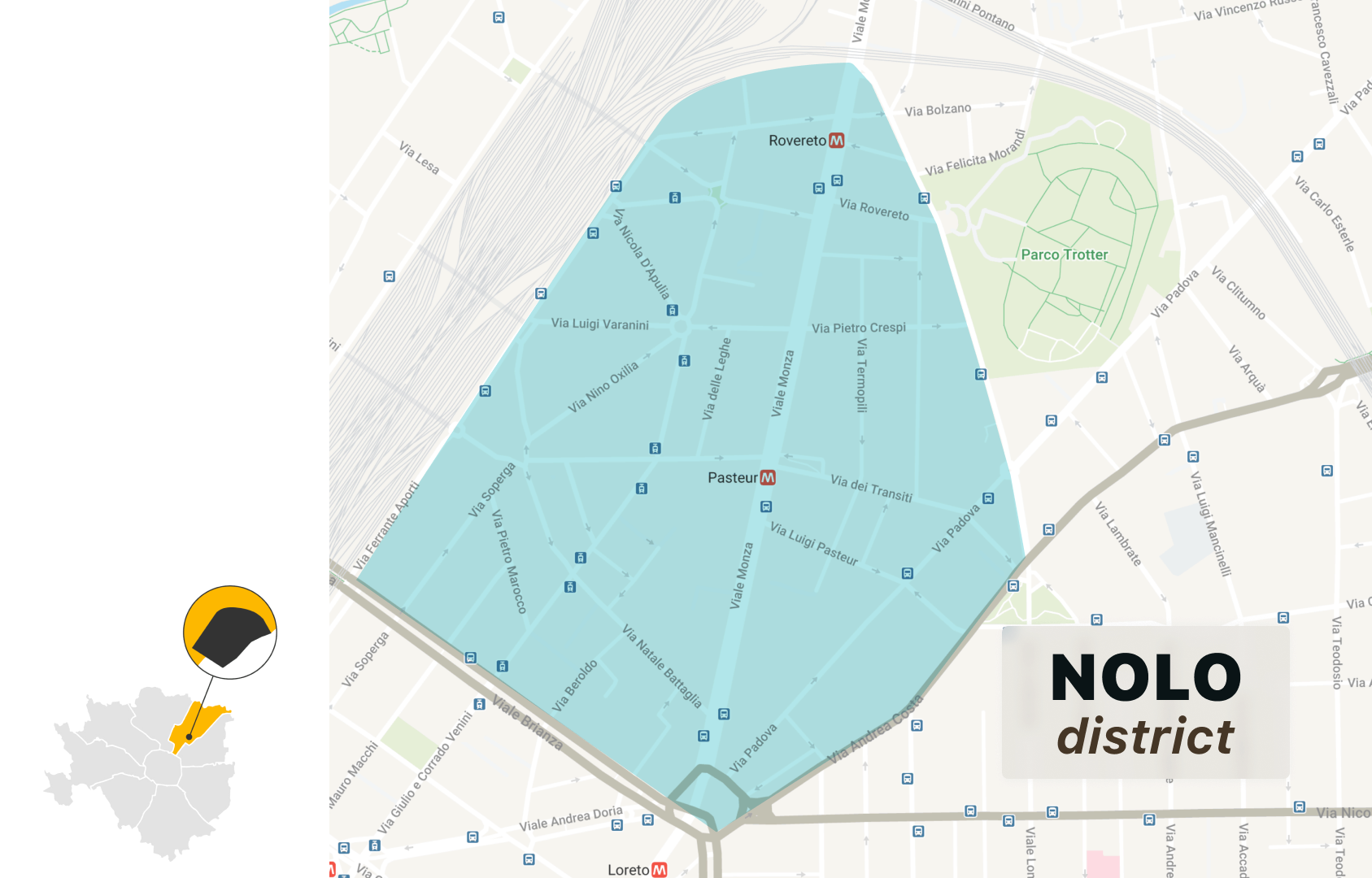
Nolo is a neighborhood in Nord Loreto as the name suggests. it is a vibrant, dynamic and evolving neighborhood that has obtained the new branding through the name “Nolo” around 2012. Along with the branding comes many social changes from both the government side and the grassroots approaches. the proactive involvement of its residents makes nolo the perfect fertile ground for social transformation to take place.
📷 Field Research
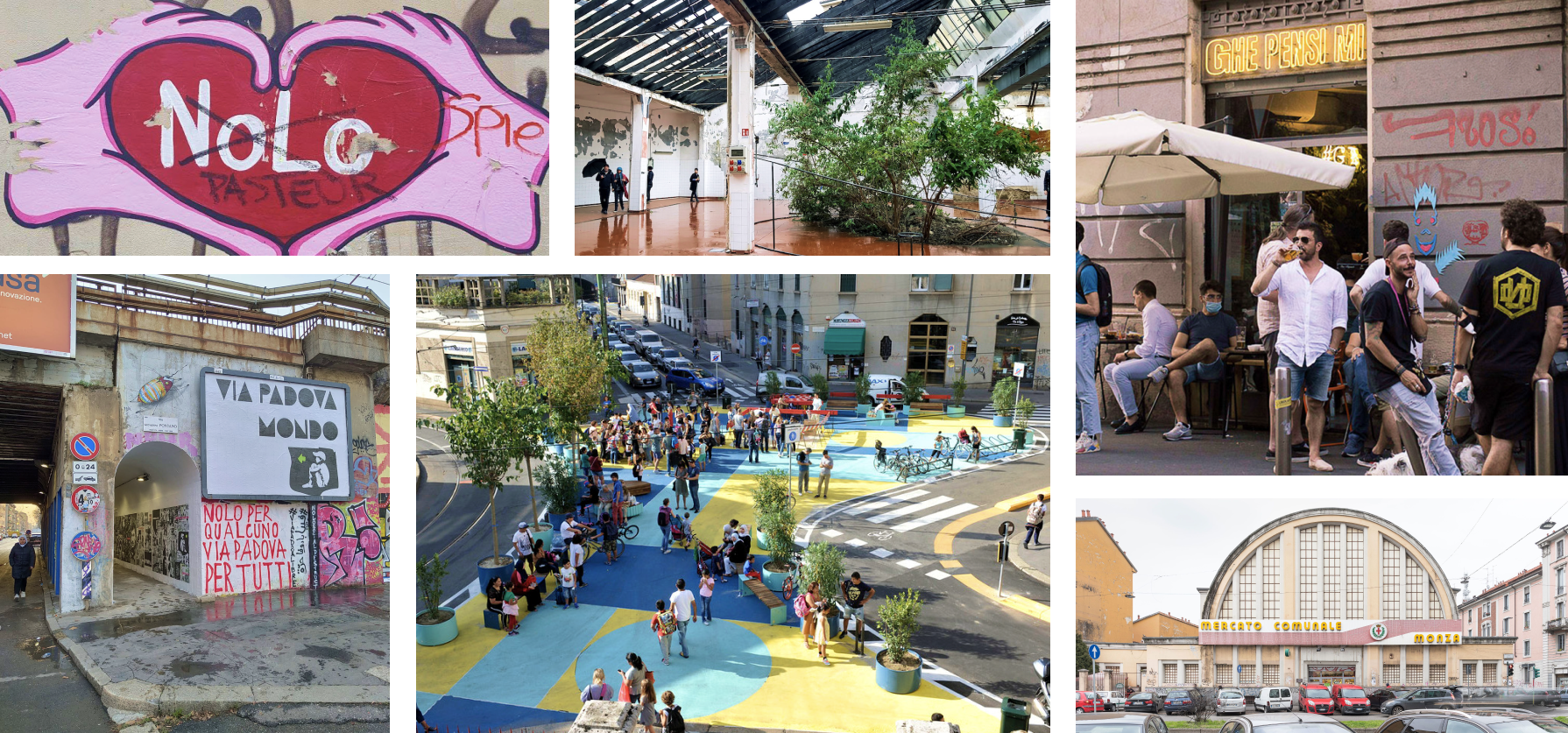
A field research was conducted to better understand the lives in Nolo, especially concerning the topic of civic engagement. Two methods were adopted, the observation and context inquiry in order to build rapid ethnography on the local citizens

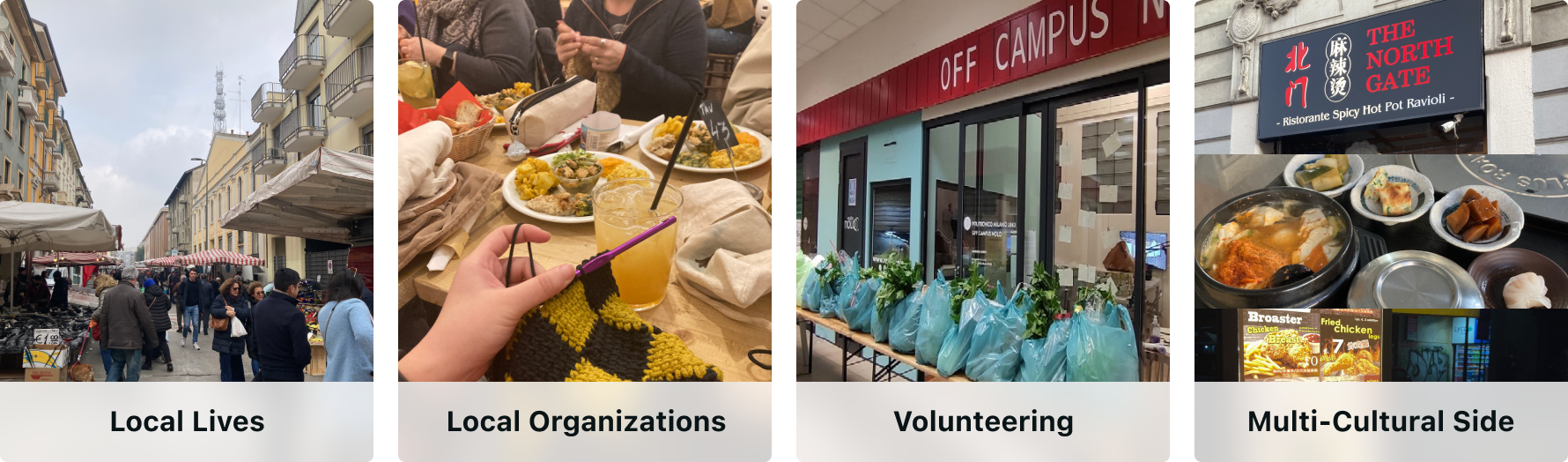
The research was also divided into four major research areas based on the previous desktop research on the area: the local lives, as shown in the picture is the open street market in the district. second the local organization, for example, I had the pleasure to sit closely to the member of the lanolo knitting club and talk with the ladies that has been living in nolo for more the 60 years. The third one is the volunteering activities such as the spesa sospesa hosted by off campus nolo. Last but not least the research took into consideration the multi-cultural side as there is a high representation of international population in nolo.
📌 Insights
Some of the main findings are that the local citizens value a lot the inter-personal relationship in the neighborhood that they are able to build meaningful connections and greet people easily when they go to the local businesses. the research also highlight the pain points. for example, the lack of motivation for younger generation to participate in volunteer and civic activities because they consider those as serious commitment. Other pain points also include the difficulties in bringing grassroots projects into real life, the lack of communication channels with experts and easier way of crowdfunding within community.

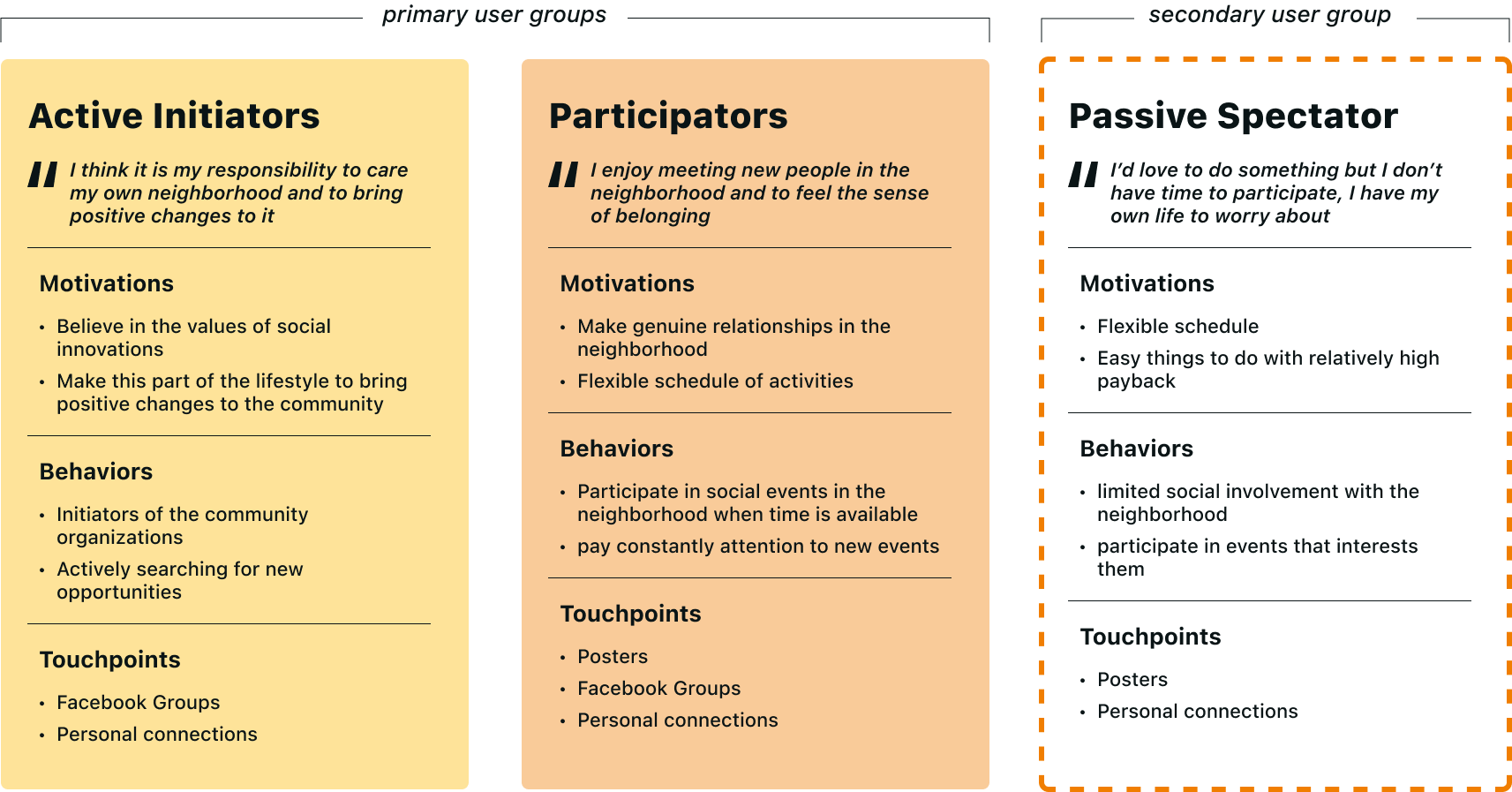
Another important insight generated from the research is the user groups. The citizens in nolo roughly fall into these three categories, the active initiators who consider caring the neighborhood as their passion and responsibility and are willing to initiate grassroots project. The participators who actively participate in local events and initiatives to offer their help. And the passive spectators who may not be so interested in devoting their time and effort to connect with the local neighborhood. As for this thesis the primary user groups are the first two who are more active in civic engagement already
With all that being said, eight drivers are generated as a synthesis of the findings from the theoretical and filed research, that has guided the following design process.

⚡️ Concept
The final concept is defined based on the previous insights generated from the literacryre review as well as the field research.
A citizen-centric mobile-based platform that utilize web 3.0 technologies to offer connecting channels and crowd-fundraising mechanism to motivate active civic participation at various levels in the urban neighborhoods

Three main functionalities are introduced in this mobile based service: Projects, Quests, and City Hall. In the following paragraphs, each of the functionalities will be explained.

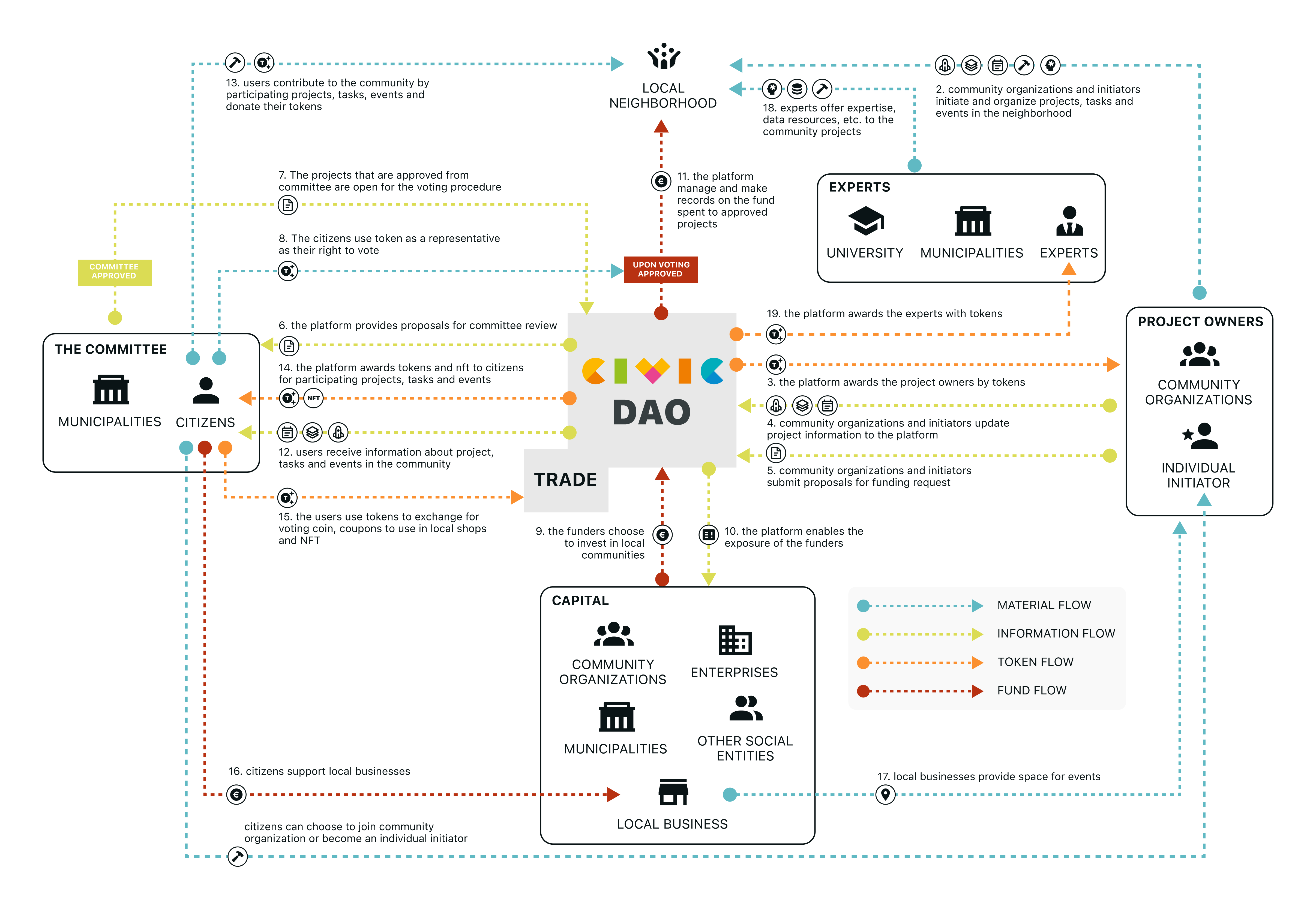
The following system map is a comprehensive mapping of the proposed service ane the relationships between the main skateholders.
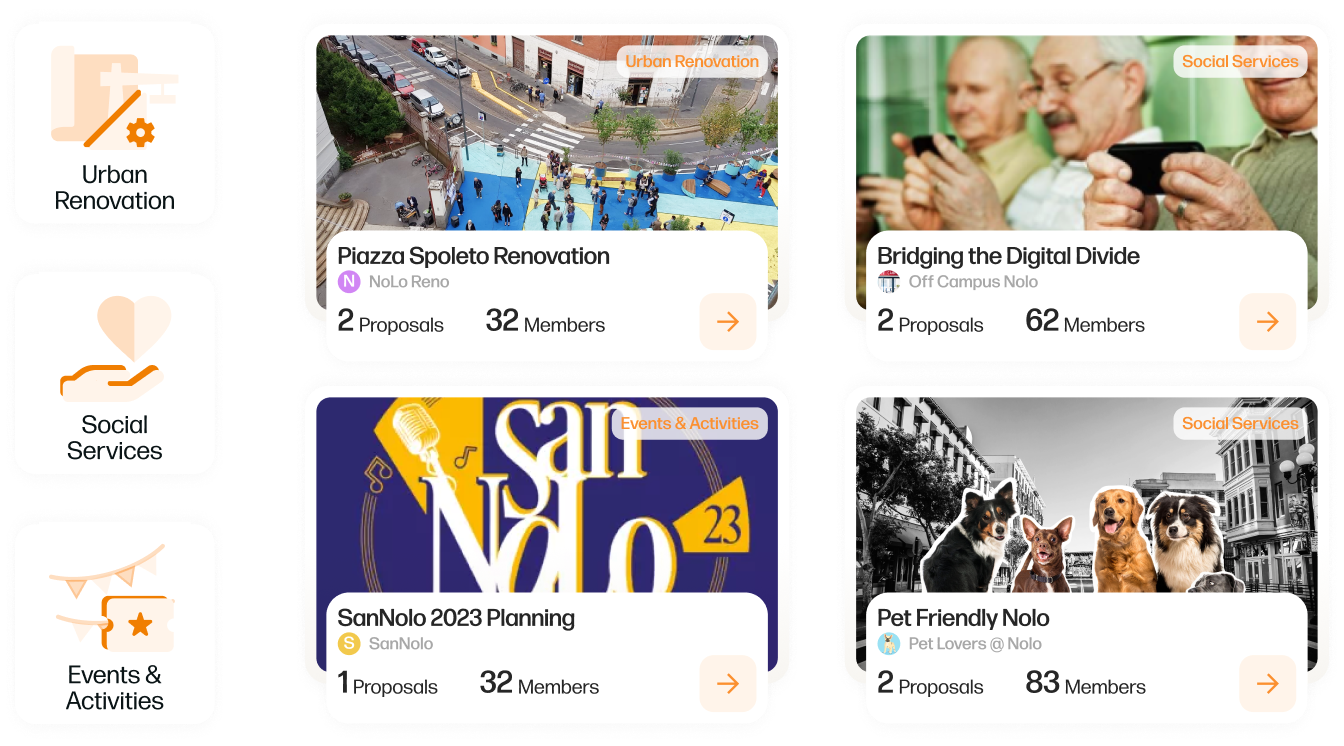
PROJECTS
Projects are grass-root projects initiated by citizens or local organizations within the neighborhood. The projects concern the benefits of the community and aim to bring positive changes.
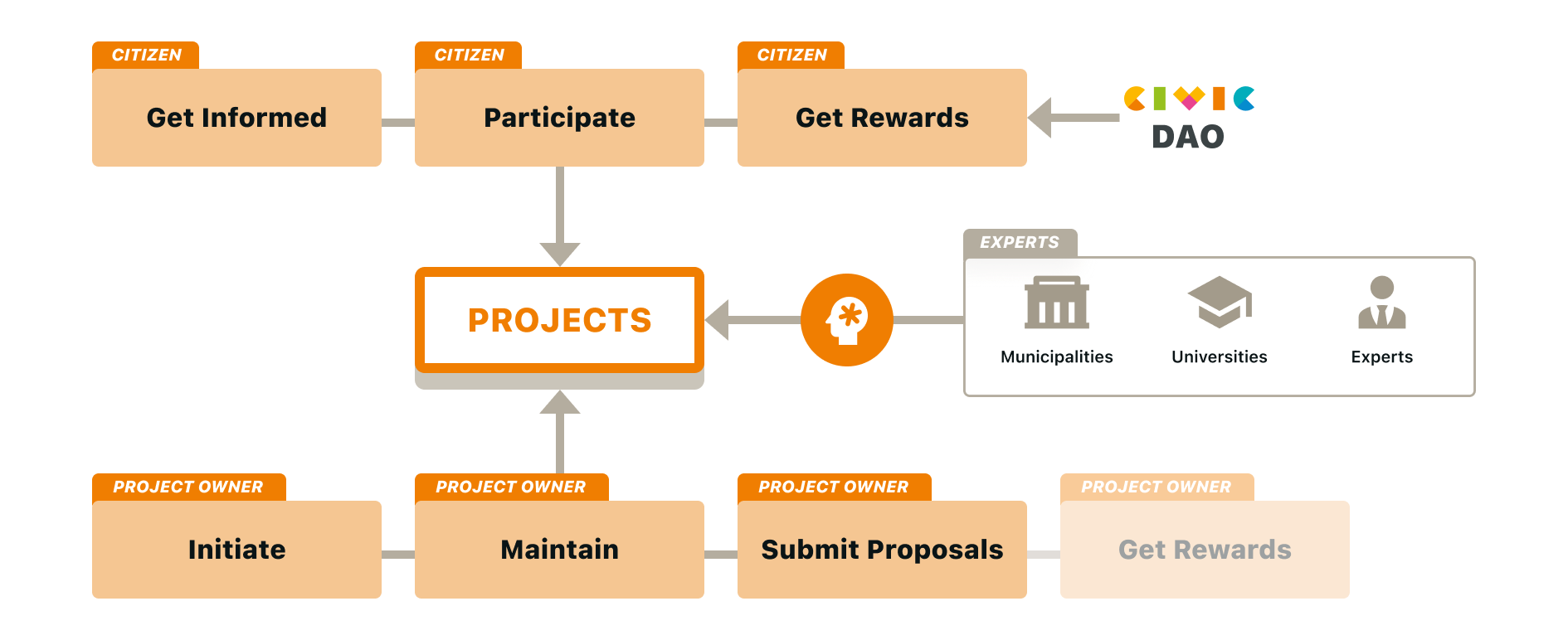
The citizens get informed, particpate, and get rewards by devoting their time, enegergy, and skills into these grass-root projects. At the same time, the citizens or local organizations can be the project owners who initiate, maintain, and organize the proposals submittion of the projects. The plaform also offer the communication with the experts in the field, such as the municipalities, universities, and industry experts.
QUESTS
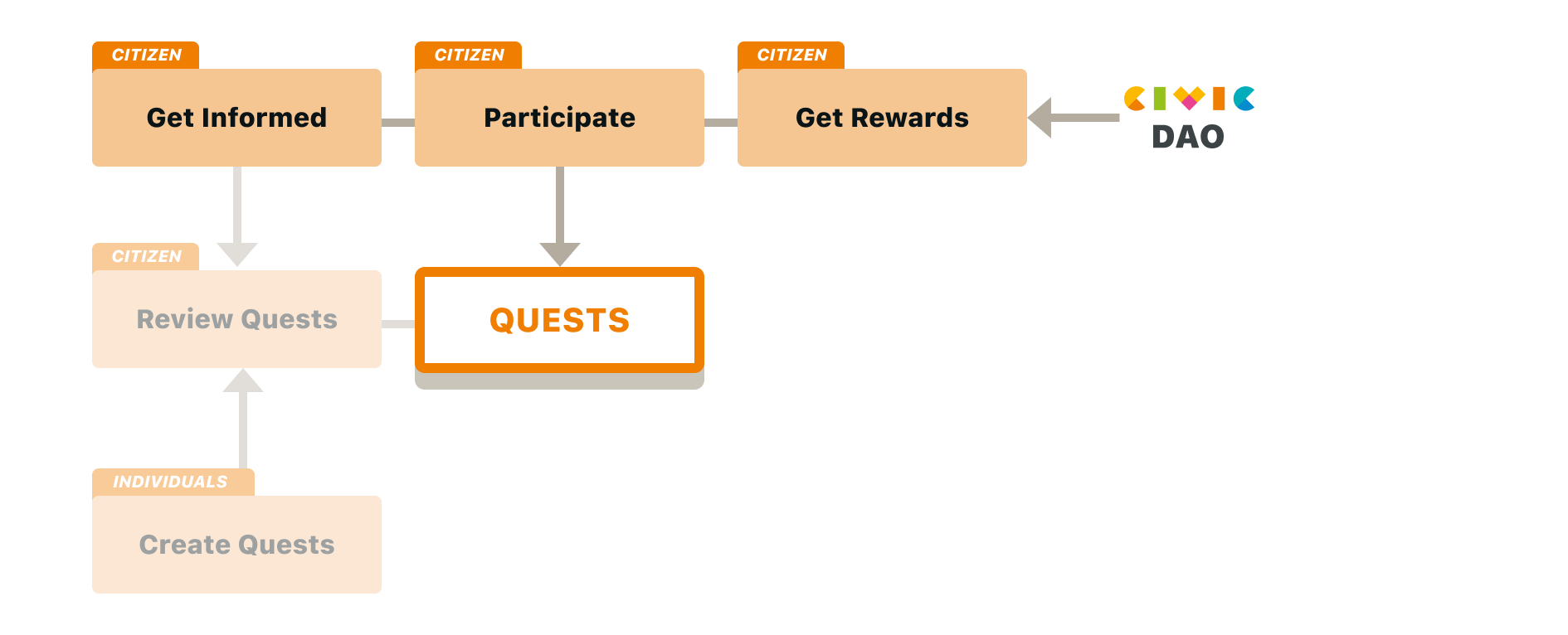
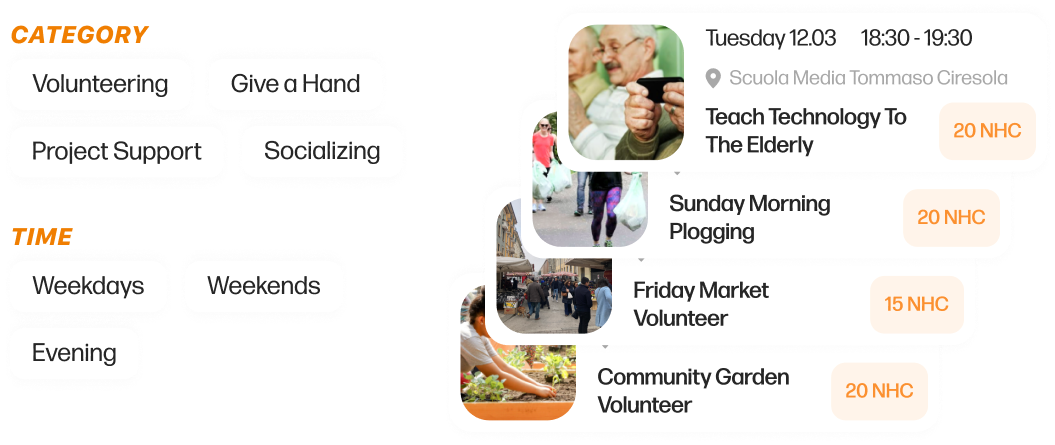
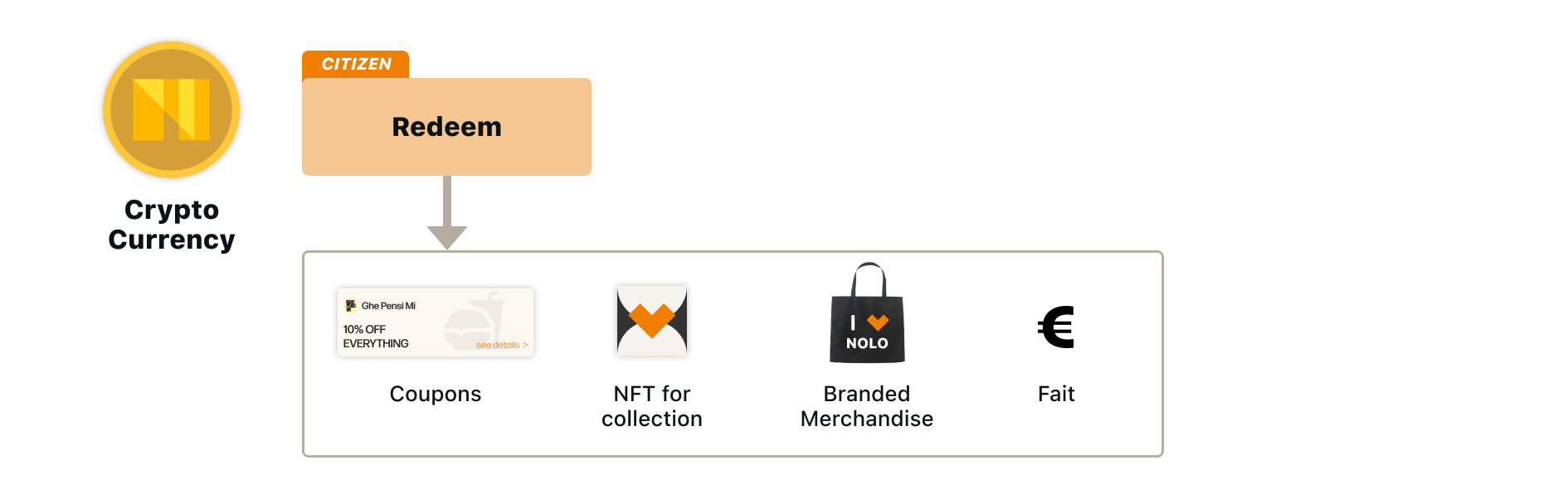
Quests, on the other hand, refers to individual pro-community behaviors that can be claimed and completed by the citizens. Citizens or local organizations can create new quests, which other platform members will review to confirm the quest’s credibility and viability for both the quest contents and rewards. Once a citizen completes a quest, they will earn tokens that can be used to participate in other parts of the platform.
CITY HALL
In the ecosystem of CivicDAO, City Hall is the place citizens can view organizational information and to vote for collective decisions. Voting is an important part of Civic DAO. It allows citizens to vote on fund-raising proposals and make decisions about how the platform should be run. The identity of citizens is confirmed through identity NFT that can be obtained providing proof of identity in the real world.

WEB 3.0
The Web 3.0 platform runs upon smart contracts based on blockchain technologies to ensure the transparency security and democracy.
😄 User Journey
Three user personas and the corresponding journey maps are created to help further elaborate the concept. The three personas represent the immigrants, young initiators, and the elderly population in the NoLo neighborhood.
User Story One: sense of belonging to the neighborhood through CivicDAO
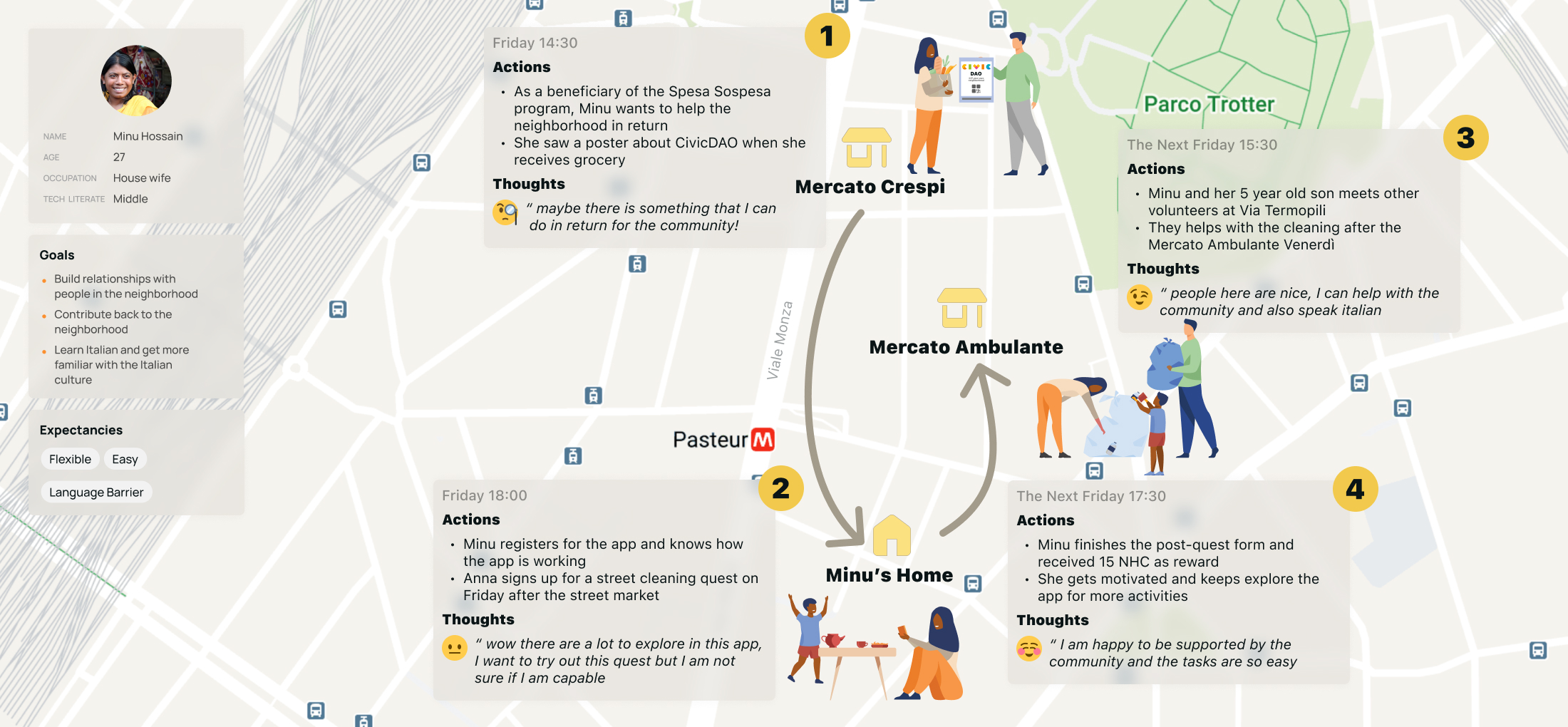
This user journey map describes the experience of Minu, a beneficiary of the Spesa Sospesa program who wants to give back to her community. She learns about the CivicDAO app while receiving her groceries. After registering and learning how the app works, Minu signs up for a street cleaning quest and joins other volunteers to clean up the area after a local street market. Upon completing the quest and receiving rewards, Minu is motivated to continue exploring the app for more ways to get involved in her community. The app's "Quest" functionality allows Minu to engage in activities that make a positive impact on her neighborhood and explore more opportunities to get involved.
User Story Two: support as a incubator for active initiators
This user journey map describes Anna's experience using the CivicDAO app to incubate grassroots projects and bring her idea of plogging to life in Nolo. After seeing the CivicDAO poster at La Cantinetta, Anna and her friend download the app, create a new project called "Plogging in Nolo", and organize the first plogging activity. Anna updates the project on the platform and receives NHC as a reward. She and her friends are motivated to explore more activities and prepare a funding proposal to purchase plogging tools. The app's "Project" functionality allows Anna to incubate grassroots projects and collaborate with like-minded individuals to create positive change in her community.

User Story Three: platform for collective decision-making
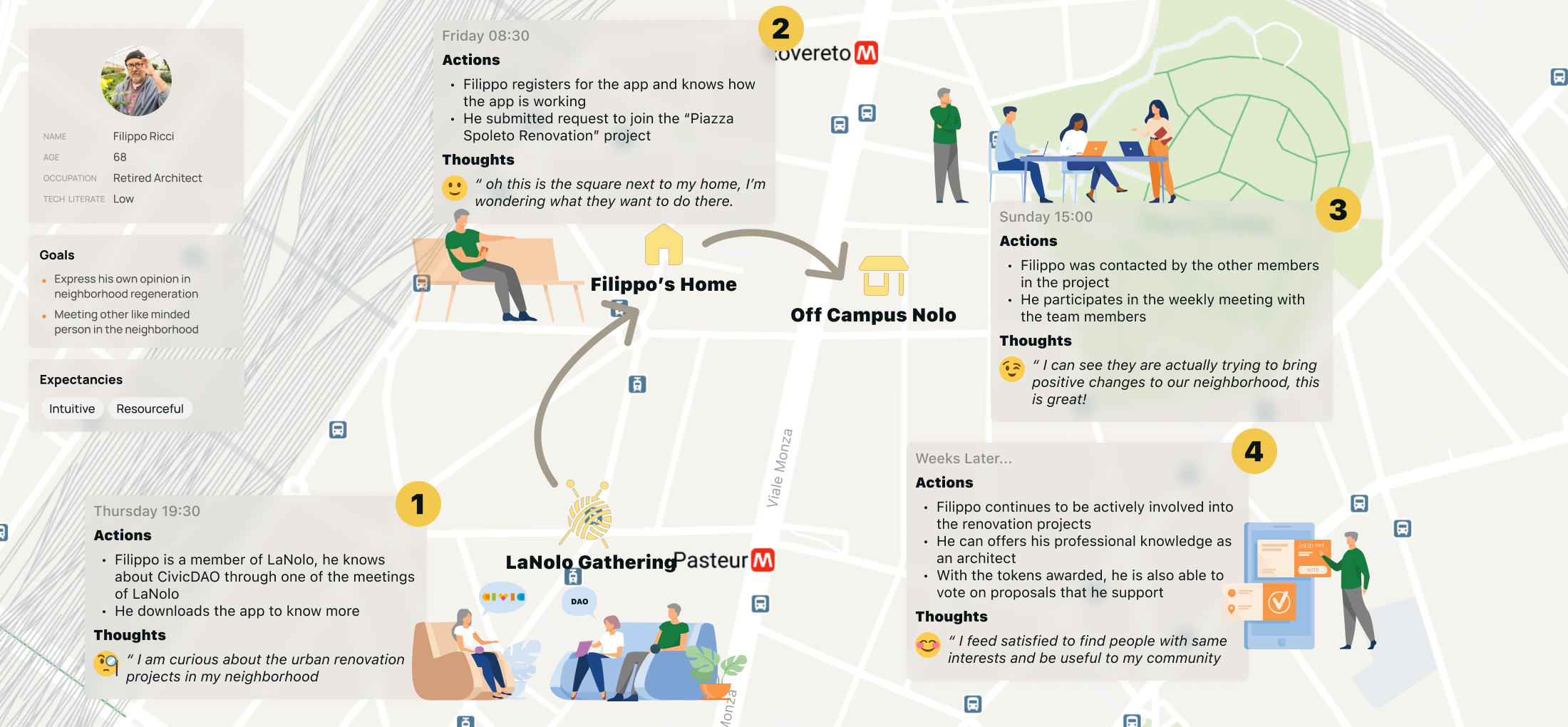
This user journey map describes Filippo's experience using the CivicDAO app to participate in collective decision-making and contribute his professional knowledge to the community. After learning about the app at a LaNolo meeting, Filippo registers and joins the "Piazza Spoleto Renovation" project. He participates in weekly meetings and offers his architectural expertise. As a reward, he receives tokens and can vote on proposals he supports. The app's "City Hall" functionality allows Filippo to have a voice in the future development of his community.
📱 Prototype
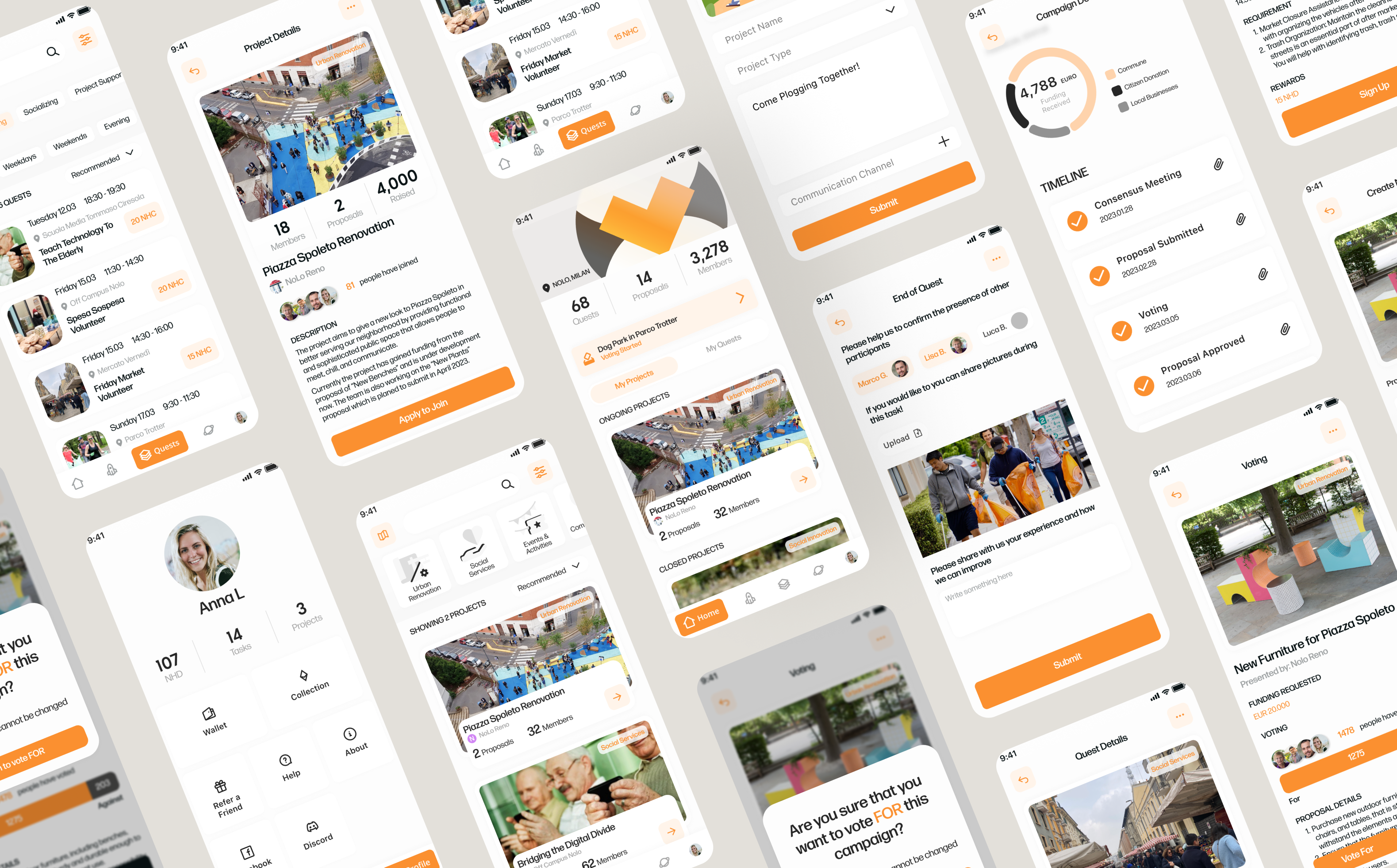
The design of the app follows the guideline of making a universal and inclusive service that is easily accessible for users ranging from kids to the elderly and new immigrants with possible language barriers. To achieve this goal, the user interface design adopts the “minimal” style to make the important information easily visible, with the help of images. The color palette is made up of vibrant but also neutral colors.
📱 Testing
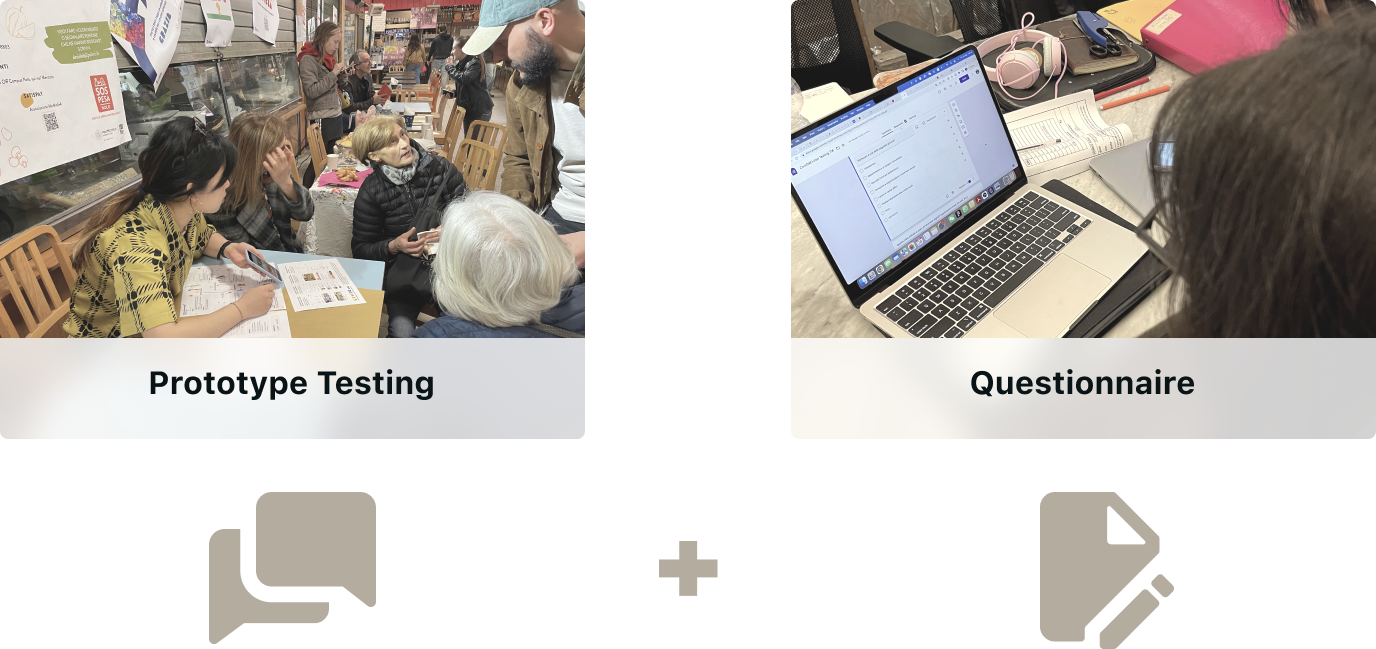
User tests were conducted with on-hand prototype testing and questioonnaire.
The result has shown positive feedbacks towards the proposed service of CivicDAO. Eight out of Ten respondents has choose quiet likely or very likely to use CivicDAO. The functionalities of quests and projects has gain equal interest of 70% with half of the respondents showing great interest in voting. When asked to describe the service with the terms of innovative, effective, impactful and viable. It is also obvious to notice the concern about this new technology and how to use it to achieve its full potential.

🎊 Conclusions
Despite the potential benefits of integrating Web 3.0 technology into the processes of urban regeneration and civic engagement, the practical applications of this technology remain scarce. In response to this, the present thesis proposes a potential implementation of this concept.
Specifically, this thesis explores the research question of “How might we promote civic engagement in the neighborhood of Nolo through the use of Web 3.0 technology?”. The research involved a comprehensive analysis of relevant literature and the design and testing of a service called CivicDAO. Through this process, the potential of Web 3.0 technology to foster positive civic engagement in the Nolo district was evaluated.
The findings of this study demonstrate that Web 3.0 technology has significant potential to encourage pro-community behaviors, incubate grassroots projects, and facilitate collective decision-making in Nolo.
The practical implications of these findings are significant for policymakers, urban planners, and community leaders in Milan and other cities who seek to promote citizen engagement and participation in decision-making processes.

Overall, the thesis has opened up the coversation about the application of Web 3.0 in the urban regenration projects, and examed the potential of using blockchain technologies in encouraging civic engagement.